
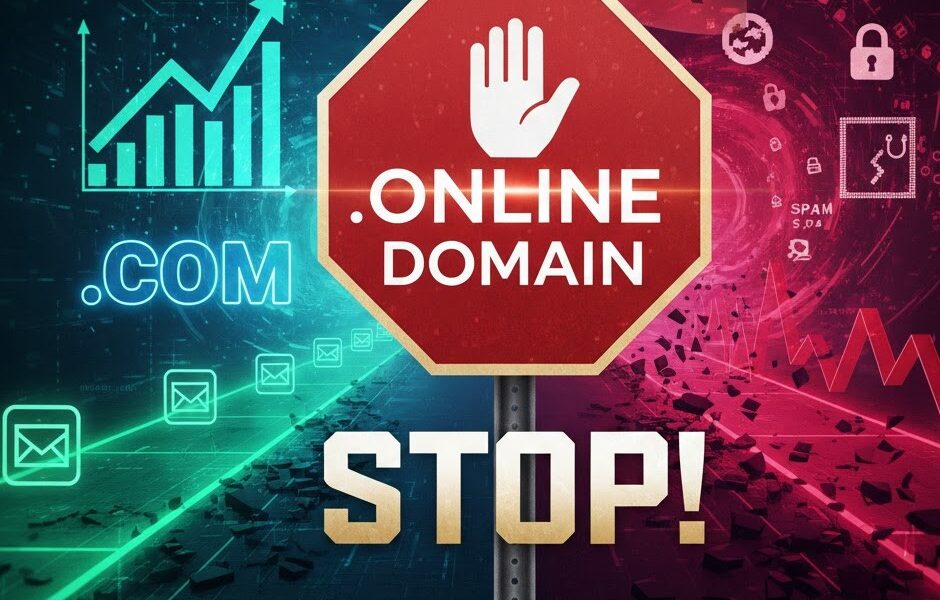
Introduction: The Hidden Dangers of .Online Domains
Choosing the right domain name is one of the most critical decisions when building your online presence. While the .online domain extension might seem like an attractive, modern option for businesses wanting to emphasize their digital nature, there are compelling strategic reasons why you should never buy a .online domain for your primary website.
Every year, thousands of entrepreneurs fall into the trap of selecting trendy domain extensions (gTLDs) without understanding the long-term consequences. At SharTech Solutions, we’ve seen how .online domains, despite aggressive marketing, come with significant drawbacks that can harm your brand, SEO efforts, and overall online success.
💡 SharTech Pro-Tip: The “Verb” Workaround
If your dream
.comis taken, don’t settle for.online. Instead, try adding a high-intent verb or “modifier” to your brand name.
- Bad:
YourBrand.online- Better:
GetYourBrand.com,ShopYourBrand.com, orYourBrandApp.com. This preserves the trust of a .com while keeping your brand name intact.
The Trust Factor: Why .Online Domains Raise Red Flags
When it comes to building credibility, your domain extension acts as your “digital storefront address.” Studies show that 75% of consumers judge a company’s credibility based on its website design and domain name. The .online extension simply does not carry the same psychological weight as traditional .com or .net domains.
Consumer Perception Issues
Internet users have been conditioned over decades to trust established extensions. When a user sees a .online domain, these negative associations often trigger:
- Questionable Legitimacy: Many “throwaway” spam websites and phishing operations use cheap .online extensions to appear legitimate.
- Lower Perceived Value: Customers often subconsciously assume .online sites are less professional, newer, or “cheaper” versions of a real brand.
- Technical Anxiety: Older demographics may not even recognize it as a valid web address, leading to a loss of potential traffic.
The SEO Trap: Why .Online Domains Struggle to Rank on Page 1
Search Engine Optimization is the backbone of online visibility. While Google officially states all extensions are treated equally, real-world user behavior (which Google tracks) tells a different story.
1. Click-Through Rate (CTR) Impact
Users are more likely to click on familiar domain extensions in search results. If your .online site appears next to a .com competitor, the .com will almost always win the click. Lower CTR signals to Google that your site is “less relevant,” which can slowly push your rankings down.
2. Reduced Backlink Potential
Authority sites are often hesitant to link to non-traditional domains. If an editor at a major tech blog sees a .online address, they may flag it as “low quality” or “spammy,” making it significantly harder for you to build the high-quality backlinks necessary for SEO success.
3. Brand Confusion and “Leaked” Traffic
Users often forget the .online extension and will instinctively type .com into their browser. If a competitor owns the .com version of your name, you are literally sending your hard-earned traffic directly to them.
Technical and Security Considerations
Beyond branding and SEO, .online domains present several technical hurdles that impact your daily operations.
Email Deliverability Issues
Many corporate email filters and providers (like Outlook or Gmail) have implemented stricter filtering for emails originating from alternative domain extensions. This can result in:
- Spam Folder Placement: Your legitimate business invoices or newsletters are more likely to be flagged.
- Authentication Challenges: Setting up advanced email security (SPF, DKIM, DMARC) can sometimes be more complex with newer gTLDs on older hosting environments.
Better Alternatives: Where to Invest Instead
If your primary .com is unavailable, we recommend these high-trust alternatives:
- The .net Extension: Still the gold standard for technology, networking, and infrastructure businesses.
- The .io Extension: Highly respected in the SaaS and startup world.
- The .co Extension: A sleek, shorter alternative that has gained mainstream acceptance by major brands.
Making the Right Choice: The Domain Selection Checklist
Before you finalize your purchase, run through this SharTech checklist:
- [ ] Verbal Clarity: Can you easily say the domain over the phone without spelling out the extension?
- [ ] Trust Check: Does it look like a domain you would enter your credit card info into?
- [ ] Future-Proofing: If you sell the business in 5 years, will the domain add value or be a liability? (Pro-tip: .com domains typically increase business valuation by 20-30%).
Conclusion: Protect Your Online Future
The decision to avoid .online domains isn’t just about following trends—it’s about making a strategic choice that protects your brand’s growth. At SharTech Solutions, we believe your domain should be an asset, not a hurdle. Instead of settling for an extension that raises red flags, invest the time to secure a domain that builds immediate trust and authority.
What do you think? Have you had a bad experience with a non-traditional domain? Share your story in the comments below!
