A major Singapore telecom cyberattack has been publicly revealed. The government attributed the breach to Chinese state-sponsored hackers. This Singapore telecom cyberattack targeted the nation’s four largest telecommunications providers—Singtel, StarHub, M1, and Simba Telecom. Officials describe it as a sophisticated cyber-espionage operation. The hacking group UNC3886 carried out this attack. This marks the first time Singapore has officially confirmed such a significant breach of its critical communications infrastructure. The attackers successfully infiltrated systems. However, authorities say the Singapore telecom cyberattack did not disrupt services or compromise personal customer data.
The Singapore Telecom Cyberattack: What We Know
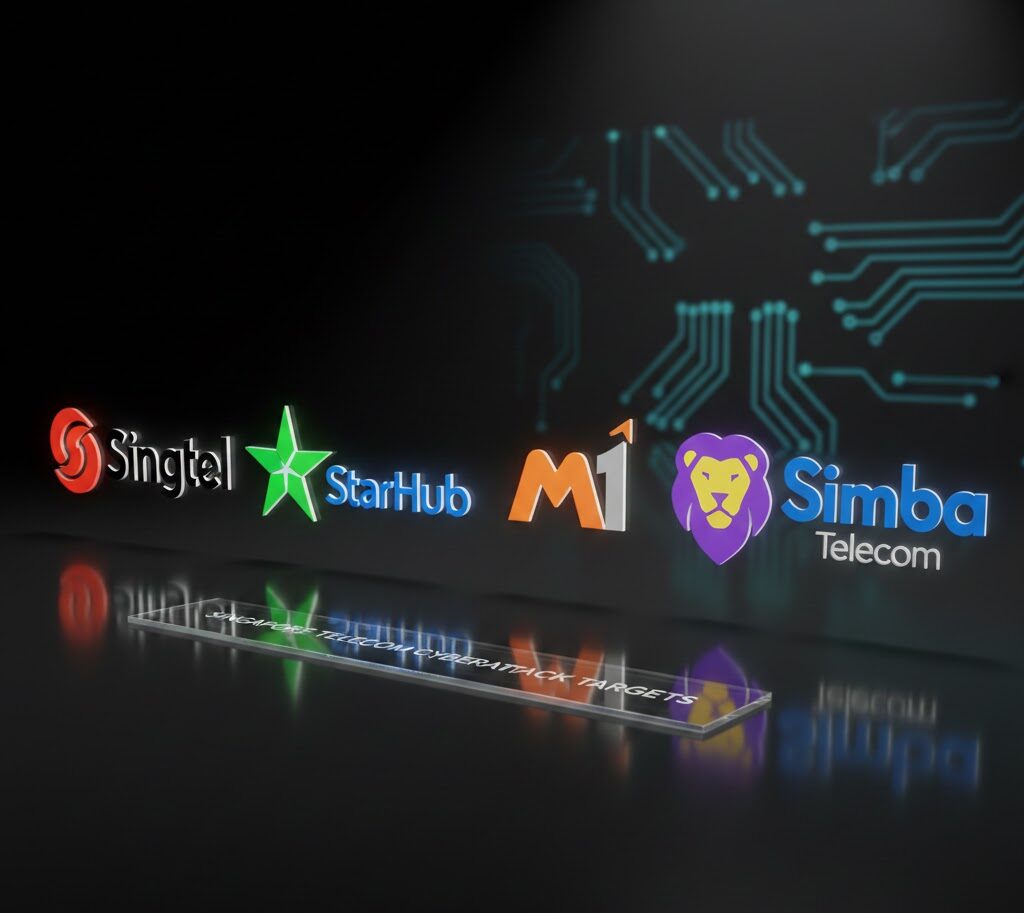
Singapore’s coordinating minister for national security, K. Shanmugam, confirmed the attack. The hacking group known as UNC3886 successfully infiltrated systems belonging to the country’s telecommunications giants: Singtel, StarHub, M1, and Simba Telecom. These four companies form the backbone of Singapore’s digital communications infrastructure. They serve millions of customers across the island nation.
The breach was serious enough to warrant a high-level government response. However, officials were quick to reassure the public that the attack had limited impact. According to Shanmugam, the intruders did not disrupt services or access personal customer information. This crucial detail likely prevented widespread panic among Singapore’s tech-savvy population.
This Singapore telecom cyberattack represents one of the most significant security incidents disclosed by the island nation in recent years. It highlights the persistent threat facing critical infrastructure operators globally.
The government’s statement revealed that hackers employed advanced persistent threat techniques. These included the use of rootkits—malicious software designed to provide long-term, hidden access to compromised systems. In one particularly concerning instance, the attackers managed to gain limited access to critical systems. Nevertheless, they were ultimately stopped before they could cause operational disruptions.
UNC3886: The Group Behind the Singapore Telecom Cyberattack
The threat actor behind this Singapore telecom cyberattack is no stranger to cybersecurity professionals. UNC3886 is a designation given by Mandiant, Google’s cybersecurity unit. This group is believed to be operating on behalf of the Chinese government. Moreover, this group has earned a reputation for technical sophistication and stealth. They specialize in exploiting zero-day vulnerabilities—previously unknown security flaws that vendors haven’t yet patched.
What makes UNC3886 particularly dangerous is their focus on network infrastructure devices. They target routers, firewalls, and virtualized environments. Traditional cybersecurity detection tools often have limited visibility in these areas. By targeting these foundational elements, the group establishes persistent footholds. These are extremely difficult to detect and remove.
The hacking group’s portfolio of targets spans multiple sectors. These include defense, technology, and telecommunications across the United States and the Asia-Pacific region. This suggests a coordinated intelligence-gathering operation with broad strategic objectives.
Singapore Telecom Cyberattack in Context: Chinese Cyber Operations
This incident doesn’t exist in isolation. The Chinese government has long been accused of conducting extensive cyber-espionage campaigns. These campaigns gather intelligence on foreign governments, corporations, and critical infrastructure. Furthermore, Western security officials have warned that China is also “prepositioning” for potential disruptive attacks. They are planting the digital tools necessary to cause damage should geopolitical tensions escalate, particularly around Taiwan.
Beijing routinely denies these allegations. However, the pattern of attacks attributed to Chinese state-sponsored groups continues to grow. Moreover, Singapore’s disclosure comes on the heels of revelations about another China-backed group, dubbed “Salt Typhoon.” This group has targeted hundreds of telecommunications companies worldwide, including in the United States.
Singapore was careful to distinguish between the two operations. Officials noted that the Singapore telecom cyberattack “has not resulted in the same extent of damage as cyberattacks elsewhere.” This is likely a reference to the more extensive compromises achieved by Salt Typhoon.
How Telecom Companies Responded to the Cyberattack
In a joint statement, the four targeted telecommunications companies made an important acknowledgment. They regularly face a variety of cyber threats. These include distributed denial-of-service (DDoS) attacks and malware campaigns. This candid admission reflects the reality of operating critical infrastructure in an era of persistent cyber conflict.
The companies emphasized their multilayered defense approach. They stated: “We adopt defence-in-depth mechanisms to protect our networks and conduct prompt remediation when any issues are detected.” This strategy involves multiple overlapping security controls. Furthermore, it ensures that if one layer is breached, others remain in place to prevent full compromise.
The statement projects confidence in their security posture. However, the fact that sophisticated attackers breached their defenses underscores a significant challenge. It highlights the enormous difficulties facing even well-resourced telecommunications providers.
Why the Singapore Telecom Cyberattack Targeted Infrastructure
Telecom companies represent particularly valuable targets for state-sponsored hackers. They serve as the nervous system of modern society. They carry everything from personal phone calls to sensitive government communications and critical business data. Additionally, access to these networks can provide intelligence agencies with unprecedented surveillance capabilities. This allows them to monitor communications, track individuals, and understand relationships between various actors.
For a sophisticated nation-state adversary, compromising telecommunications infrastructure offers several strategic advantages. First, it provides access to metadata and potentially content from communications passing through the network. Additionally, it offers insights into the technical architecture of a country’s digital infrastructure. This could prove valuable in planning future operations. Third, in a conflict scenario, pre-positioned access could enable disruption of communications at a critical moment.
Singapore’s role as a major regional hub is significant. It serves finance, technology, and international trade. Therefore, its telecommunications infrastructure is an especially attractive target for foreign intelligence services.
Singapore’s Cybersecurity Response to the Telecom Cyberattack

Singapore has invested heavily in cybersecurity over the years. The country recognizes that its status as a highly digitalized, globally connected city-state makes it vulnerable. It faces both opportunities and threats from cyber attacks. Consequently, the country has developed robust cybersecurity frameworks. It regularly conducts exercises to test its resilience against digital attacks.
The decision to publicly attribute this attack to a Chinese state-sponsored group represents a significant diplomatic step. Attribution in cyberspace is technically challenging and politically sensitive. It often requires governments to weigh the value of public disclosure against the risk of diplomatic friction.
By naming UNC3886 and linking the group to China, Singapore is sending a clear message. It will not tolerate attacks on its critical infrastructure, even from powerful nation-states. Moreover, this public stance may serve to put other potential adversaries on notice. It also helps rally international support for stronger cybersecurity norms.
Global Telecom Cyberattacks: Singapore Is Not Alone
The attack on Singapore’s telecom providers is part of a disturbing global trend. In recent years, telecommunications companies worldwide have found themselves targeted by state-sponsored hacking groups. The Salt Typhoon campaign alone has affected hundreds of companies across multiple continents. This demonstrates both the scale and coordination of these operations.
In the United States, revelations about Chinese hackers have prompted urgent responses. They have penetrated telecommunications networks, leading to congressional hearings and calls for improved security standards. The interconnected nature of global telecommunications is concerning. A breach in one country can potentially provide access to international communications passing through that infrastructure.
This reality has prompted calls for greater international cooperation. There is a need for stronger security requirements for telecommunications equipment. Additionally, there are demands for more transparent information-sharing about threats and incidents.
After the Singapore Telecom Cyberattack: Future Security Measures
This incident demonstrates an important reality. The cybersecurity challenge facing telecommunications providers is formidable and evolving. The use of zero-day exploits and advanced persistent threats is increasing. Attacks targeting the foundational infrastructure of networks require constant vigilance. Therefore, innovation in defense is essential.
For Singapore and other nations facing similar threats, the path forward involves several key elements. These include continued investment in cybersecurity capabilities and stronger public-private partnerships between government and telecommunications providers. Additionally, international cooperation is needed to establish consequences for state-sponsored cyberattacks. Ongoing research into new defensive technologies is also crucial.
Singapore has shown transparency in disclosing this attack. It has reassured the public that services and personal data remained secure. This approach may serve as a model for other nations. They must grapple with how to address state-sponsored cyber threats without causing unnecessary alarm or revealing too much about defensive capabilities.
Conclusion
The Singapore telecom cyberattack targeted the country’s four largest telecommunications companies. The China-backed UNC3886 hacking group carried out this operation. It serves as a stark reminder that critical infrastructure remains under constant threat. These threats come from sophisticated state-sponsored adversaries. Singapore’s defenses prevented the worst-case scenarios from materializing. However, the fact that these attackers achieved even limited access to critical systems is significant. It highlights the ongoing cat-and-mouse game between attackers and defenders in cyberspace.
Digital connectivity is becoming ever more central to economic prosperity and national security. Therefore, the protection of telecommunications infrastructure will remain a top priority for governments worldwide. Singapore’s experience offers valuable lessons. It shows both the threats we face and the importance of robust, multilayered defenses. This must be combined with the political will to publicly attribute attacks and hold adversaries accountable.
The cyber domain shows no signs of becoming less contested. Telecom companies will continue to find themselves on the front lines of a largely invisible conflict. However, this conflict has profound implications. It affects privacy, security, and the stability of the digital systems on which modern society depends.