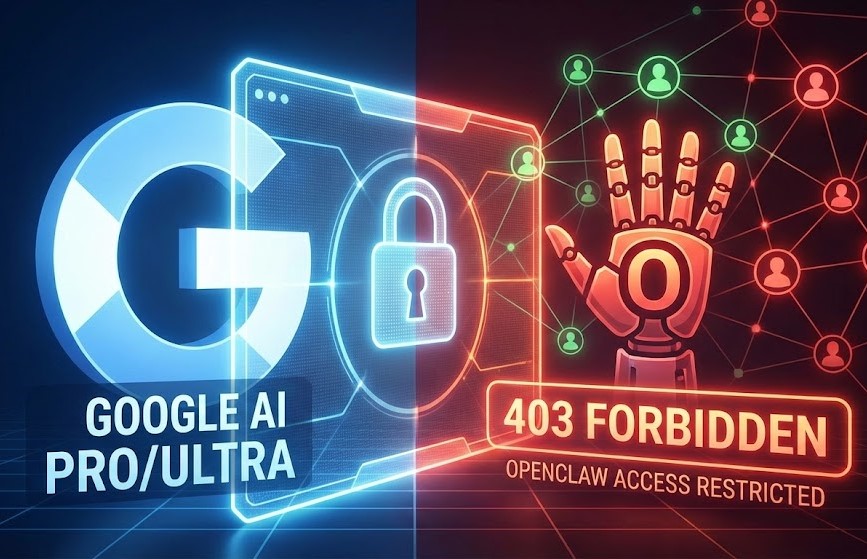
If you’ve tried to log into your Gemini Ultra dashboard this morning only to be met with a cold “403 Forbidden” error, you aren’t alone.
Over the last 72 hours, Google has initiated a massive restriction wave targeting AI Pro and Ultra subscribers who use OpenClaw—the hyper-popular open-source agent framework. What started as a minor terms-of-service (ToS) update has spiraled into a high-stakes standoff between big tech platforms and the developer community.
The “403 Forbidden” Wave: What’s Actually Happening?
Unlike standard account suspensions, this restriction isn’t a simple “Please reset your password.” Google’s automated systems are flagging accounts that authenticate via OAuth tokens through unofficial third-party harnesses.
The primary culprit is OpenClaw (formerly known as Clawdbot and Moltbot). Users paying for the top-tier $249.99/month Ultra subscription are reporting that their accounts are being “black-holed.” Because OpenClaw requires broad system access to function as an autonomous agent, Google’s security layer is treating these connections as a high-risk data exfiltration event.
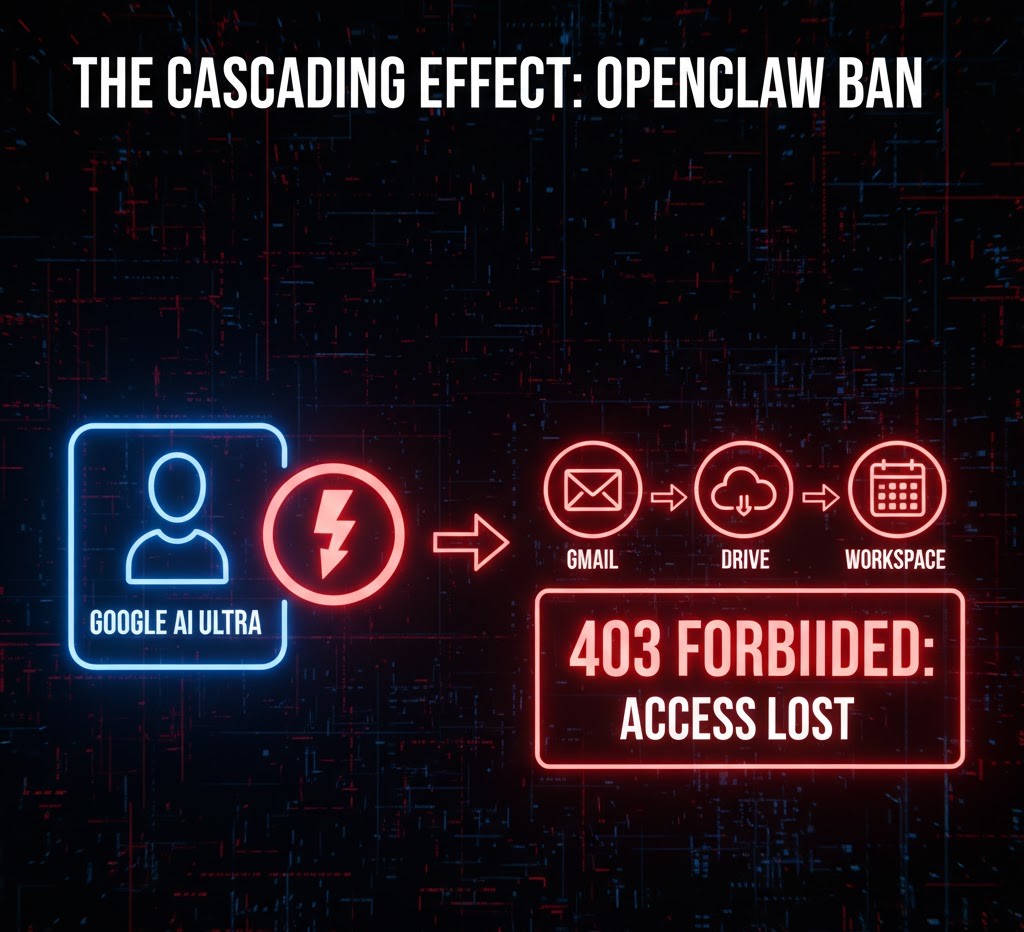
The “Cascading” Danger: The real fear isn’t just losing Gemini access. Because Google accounts are unified, several users on the Google AI Developer Forum have reported “cascading” restrictions. This means a flag on your Gemini usage could potentially lock your Gmail, Google Drive, and Workspace access while the “security review” is pending.
The Anthropic Connection: A Unified Front
This move didn’t happen in a vacuum. Just two days ago, Anthropic updated its legal terms to explicitly forbid using OAuth tokens for third-party tools like OpenClaw.
The industry is watching what looks like a coordinated effort to kill “AI wrappers.” By forcing users to move away from account-based OAuth and toward paid API keys, platforms like Google and Anthropic are doing two things:
- Protecting Revenue: API usage is billed per token, whereas subscriptions often allow for higher “hidden” costs when driven by automated agents.
- Closing Security Holes: Tools with full shell access (like OpenClaw) are inherently risky. A single “indirect prompt injection” could allow an attacker to send an email or delete a file through your agent.
The Peter Steinberger Factor
The plot thickened on February 15, 2026, when OpenAI CEO Sam Altman announced the “acqui-hire” of Peter Steinberger, the creator of OpenClaw.
While OpenClaw has transitioned to an independent foundation, the fact that its architect is now leading OpenAI’s agent division has clearly put Google and Anthropic on high alert. Many in the community view these bans as “AI Lawfare”—an attempt to limit the reach of an open-source tool that is now backed by a chief competitor.
How to Fix the 403 Error & Protect Your Account
If your account has been flagged, or if you want to avoid the next ban wave, follow these steps immediately:
- Stop using OAuth for Wrappers: If a tool asks you to “Sign in with Google” to provide it with your Gemini Pro/Ultra capabilities, don’t. This is the primary trigger for the current restriction wave.
- Switch to API Keys: Use the official Google AI Studio API. It is more expensive on a per-token basis, but it is the only “ToS-compliant” way to run an agentic workflow without risking your entire Google identity.
- Diversify Your Toolkit: Never let one Google account hold your $250/mo AI subscription and your primary business email. If a ban hits, you don’t want your calendar and inbox to go dark.
- Isolate Your Agents: If you must run OpenClaw, run it on a dedicated “burner” account or a local sandbox with zero access to your primary personal data.
The Verdict: Is the Era of “Free” Wrappers Over?
The OpenClaw crackdown signals the end of the “Wild West” era for AI subscriptions. Google is no longer willing to look the other way when users leverage a consumer-priced subscription to run enterprise-grade automation.
For developers at shartech.cloud, the message is clear: if you are building agents, build them on the API, not on a hijacked OAuth token. The convenience of a $250 flat fee isn’t worth the risk of a permanent 403 error on your digital life.