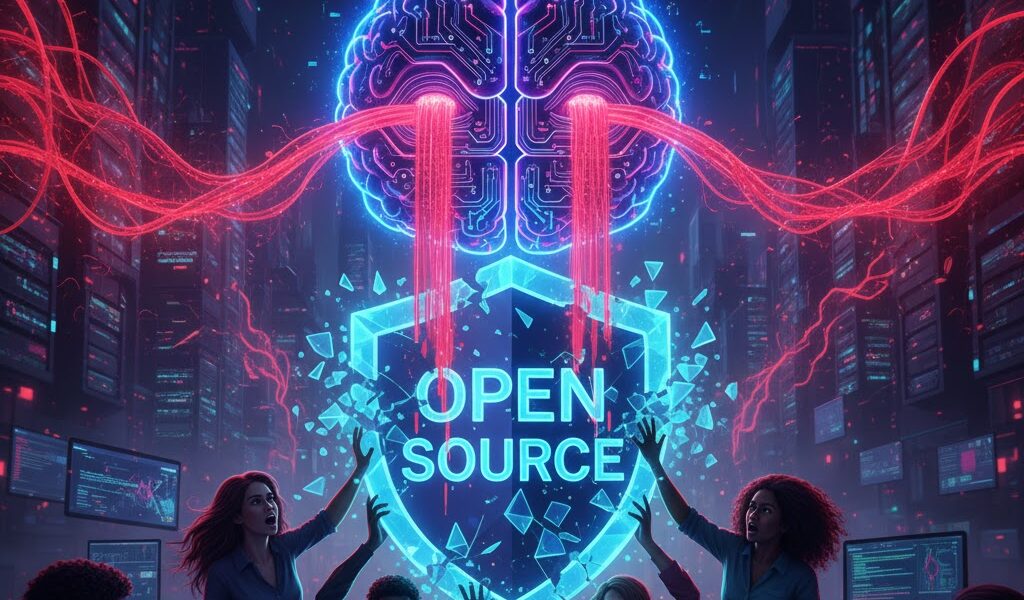
The Open Source Revolution is Under Threat
The open source movement has been the backbone of technological innovation for decades. From Linux powering servers worldwide to WordPress running 42% of all websites, open source has democratized technology. But today, artificial intelligence is creating unprecedented challenges that threaten this collaborative ecosystem.
Recent developments show that AI is not just disrupting industries—it’s fundamentally altering how open source communities operate. While we have seen how advanced models like GPT-5.2 are solving physics puzzles, the promise of automated code generation is creating a paradox: it enhances productivity while undermining the very principles that made open source successful.
How AI is Disrupting Open Source Communities
The impact of AI on open source is multifaceted and concerning. Large language models and code generation tools are changing how developers interact with open source projects in ways that many community leaders didn’t anticipate.
The Quality Crisis in AI-Generated Code
One of the most significant issues is the quality of AI-generated code contributions. According to the 2026 International AI Safety Report, studies show that up to 30% of AI-generated code contains security vulnerabilities that human developers might miss. This mirrors the risks we saw during the Singapore telecom cyberattack, where automated flaws became entry points for exploitation.
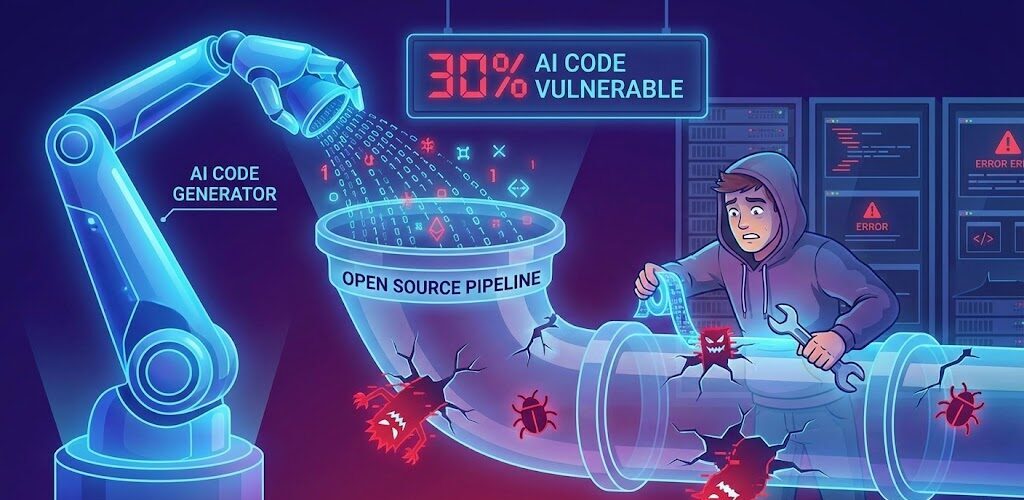
Consider this: when AI tools generate code snippets for open source repositories, they often lack the contextual understanding that human developers possess. This leads to:
- Security vulnerabilities that bypass traditional review processes
- Inconsistent coding standards across projects
- Documentation that doesn’t match actual implementation
- Performance issues that only surface in production environments
The Erosion of Community Collaboration
Open source has always thrived on human collaboration, mentorship, and knowledge sharing. However, AI tools are creating a barrier between experienced developers and newcomers. When developers rely heavily on AI-generated solutions, they miss out on the learning opportunities that come from struggling with problems and discussing solutions with peers.
Community forums and discussion boards are seeing a shift. Instead of detailed explanations and collaborative problem-solving, many threads now feature simple requests like “generate this code for me” or “fix this AI output.” This fundamentally changes the dynamic that made open source communities vibrant and educational.
The Economic Impact on Open Source Sustainability
The financial implications of AI on open source are equally troubling. Many open source projects rely on community contributions, corporate sponsorships, and consulting services. AI is disrupting these revenue models in several ways.
Undermining Developer Expertise
As AI tools become more sophisticated at generating code, the perceived value of human expertise decreases. Companies that once hired open source contributors for their deep understanding of specific projects are now questioning whether AI can replace these roles. This creates a vicious cycle where:
- Experienced developers receive fewer opportunities
- Project maintenance suffers due to lack of funding
- Code quality declines as fewer experts remain involved
- Community trust erodes as projects become less reliable
The Commercialization Paradox
Ironically, while AI threatens open source sustainability, it’s also being used to create proprietary alternatives. Companies are using open source foundations to train their AI models, then creating closed, commercial products based on that knowledge. This creates an unfair advantage where:
- AI companies benefit from years of open source development
- Traditional open source projects struggle to compete
- Community contributors see their work used to create proprietary solutions
- The incentive to contribute to open source diminishes
Real-World Examples of AI’s Impact
The theoretical concerns about AI and open source are becoming reality in several high-profile cases. Let’s examine some concrete examples that illustrate the challenges facing the open source community.
GitHub Copilot and Code Licensing Issues
GitHub Copilot, powered by OpenAI’s Codex, has raised significant concerns about code licensing and attribution. The tool was trained on billions of lines of open source code, but it doesn’t properly attribute or respect the licenses of the original work. This has led to legal challenges and community backlash.
Developers have discovered that Copilot sometimes generates code that’s nearly identical to existing open source projects, raising questions about intellectual property rights. The situation becomes even more complex when considering that many open source licenses require attribution and share-alike provisions that AI tools don’t honor.
The Stack Overflow Data Controversy
When Stack Overflow’s data was used to train AI models without proper compensation or attribution, it highlighted a broader issue in the tech industry. The platform that hosted years of developer knowledge and community contributions saw its data harvested to create commercial AI products that could potentially replace the need for such community resources.
This situation demonstrates how AI companies can extract value from open source and community-driven platforms without adequately compensating the contributors who made that value possible in the first place.
Preserving Open Source in the Age of AI
Despite these challenges, there are concrete steps that developers, companies, and communities can take to protect and preserve open source values in the AI era.
Implementing AI Governance in Open Source Projects
Open source projects need to establish clear guidelines for AI-generated contributions. This includes:
- Requiring human review of all AI-generated code
- Implementing automated security scanning for AI contributions
- Creating documentation standards that AI tools must follow
- Establishing attribution requirements for AI-assisted work
Educating Developers About AI Limitations
The open source community must prioritize education about the limitations and risks of AI tools. This includes teaching developers to:
- Critically evaluate AI-generated code
- Understand the security implications of automated code generation
- Recognize when human expertise is essential
- Maintain the collaborative spirit of open source
Creating Sustainable Funding Models
To ensure the long-term viability of open source projects, new funding models must be developed that account for the AI era. This might include:
- AI companies contributing a portion of their revenue to open source foundations
- Creating premium support models for AI-assisted open source projects
- Establishing legal frameworks for AI training on open source data
- Developing community-owned AI tools that benefit open source directly
The Future of Open Source: Adaptation or Extinction
The open source movement stands at a critical juncture. AI presents both existential threats and opportunities for evolution. The question is whether open source can adapt quickly enough to survive in an AI-dominated landscape.
The answer likely lies in a balanced approach that embraces the benefits of AI while preserving the core values of open source: collaboration, transparency, and community-driven innovation. This requires active participation from all stakeholders—developers, companies, users, and policymakers.
Open source has survived previous technological disruptions, from the rise of proprietary software to cloud computing. Its resilience comes from its community-driven nature and the fundamental belief that shared knowledge benefits everyone. The challenge now is to ensure that AI enhances rather than destroys these principles.
The future of open source depends on our collective ability to establish ethical frameworks for AI development, create sustainable funding models, and maintain the human element that has always been the heart of open source collaboration. Without these efforts, we risk losing one of technology’s greatest achievements to the very tools meant to enhance it.