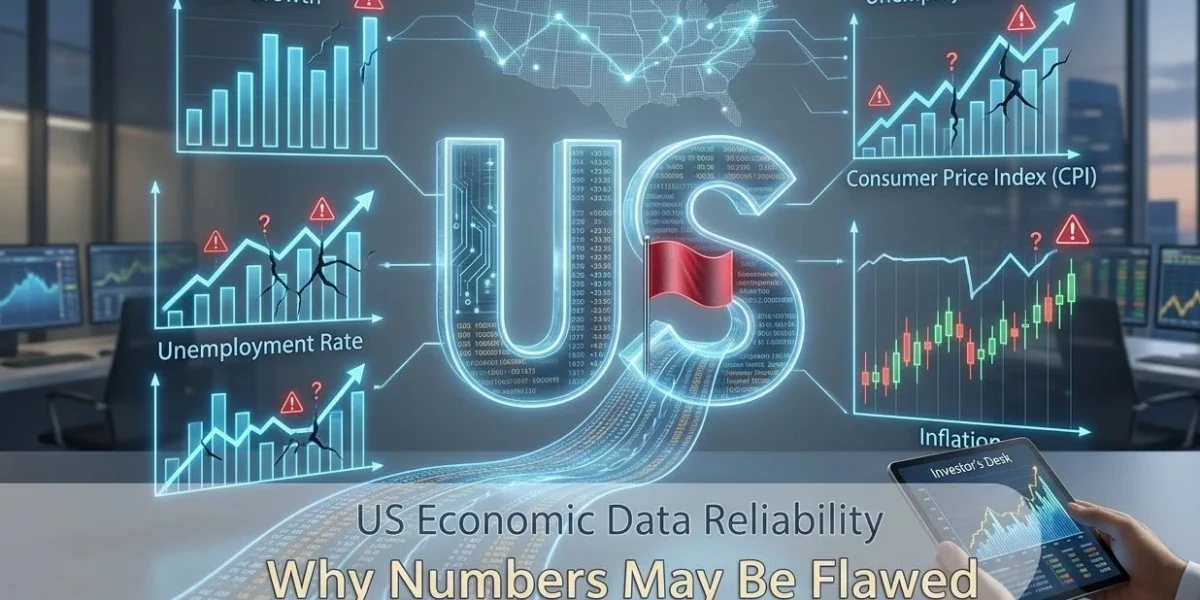
US economic data reliability is now a major concern for global investors. When you check unemployment or inflation rates, you assume the numbers are perfect. However, the foundation of your financial strategy may be at risk. This issue affects everything from retirement portfolios to federal interest rate hikes.
Why US Economic Data Reliability is Declining
Traditional survey methods are struggling to keep pace with the modern world. Government agencies face four mounting challenges today:
- Lower Response Rates: [Internal Link: See our guide on labor trends] shows that survey participation has dropped.
- Funding Gaps: Budget constraints limit the depth of survey coverage.
- Legacy Systems: Old tools fail to capture real-time digital transactions.
- Data Lags: Official reports are often 30 to 60 days old when published.
According to recent reports from the [External Link: Bureau of Labor Statistics], these gaps create “non-response bias.” This bias makes it harder to see the true state of the economy.
How Unreliable Data Impacts Your Finances
This crisis hits your wallet directly. Here are three ways data flaws change your life:
- High Risk for Investors: Market indicators rely on accurate inputs. If inflation is underreported, your purchasing power erodes faster than you realize.
- Poor Business Planning: Companies use spending data to hire staff. Faulty growth projections lead to store closures and job losses.
- Policy Errors: The Federal Reserve is “data-dependent.” If the data is wrong, interest rate decisions will be poorly timed.
Solving the Economic Data Reliability Gap
The private sector is now stepping in to fix these issues. Analysts are using “Alternative Data” to find the truth:
Using Satellite Imagery
Hedge funds use satellites to count cars in retail parking lots. This provides a real-time look at consumer activity. It does not rely on a person’s memory or a slow survey.
Real-Time Payment Tracking
Mobile payment data shows consumer confidence as it happens. If spending stops on Tuesday, analysts know by Wednesday. This is much faster than waiting for a monthly government report.
Blockchain Verification
Some experts propose using blockchain for economic data. This creates a tamper-proof record of activity. It could eliminate political pressure and increase public trust.
Future Outlook for Economic Indicators
Data uncertainty will likely persist for years. Experts predict several major shifts in the landscape:
- Short-term: Expect more market volatility. Official data is often “revised” a month later, causing sudden price swings.
- Medium-term: Investors will move toward “Hybrid Data.” This combines government reports with private-sector indicators.
- Long-term: AI-powered monitoring will become the standard. These systems detect economic shifts instantly.
Conclusion: Navigating Data Uncertainty
The US economic data reliability crisis is a call to modernize. You cannot control the accuracy of official statistics. However, you can control how you use them.
Remain skeptical of single data points. Always cross-reference your sources. By looking beyond the headlines, you can navigate this uncertain landscape with much more confidence.