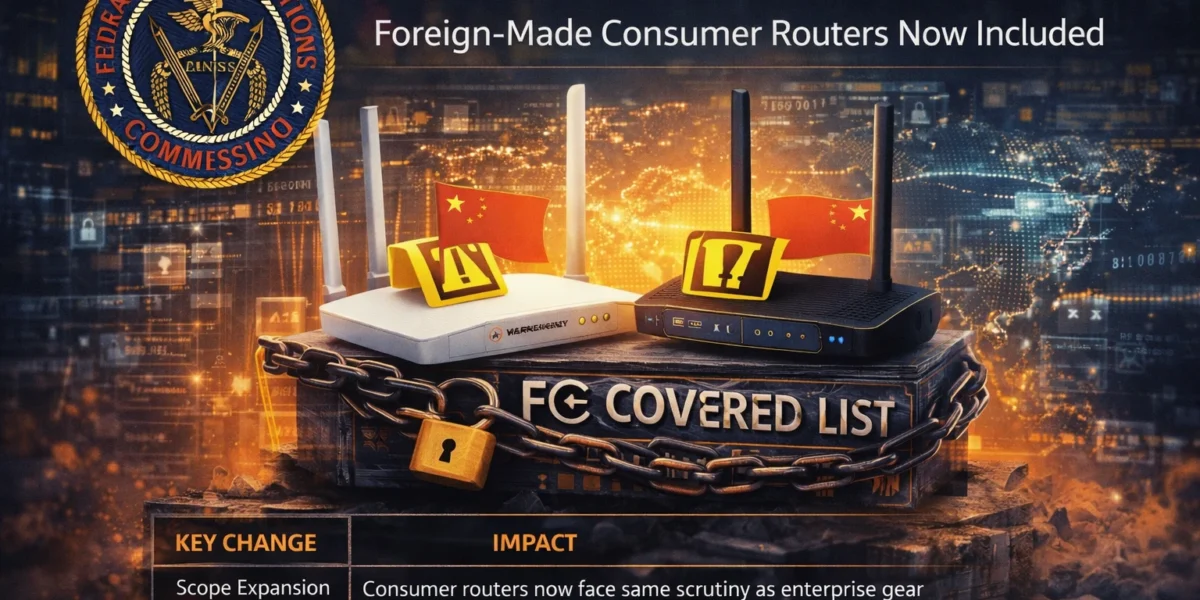
The Federal Communications Commission (FCC) has made a significant update to its Covered List, now including foreign-made consumer routers in its regulatory oversight. This decision, which has been gaining significant traction in the tech community and on platforms like Hacker News, represents a major shift in how network security and supply chain integrity are addressed at the federal level.
| Key Change | Impact |
|---|---|
| Scope Expansion | Consumer routers now face same scrutiny as enterprise gear |
| Market Effect | Potential 15–20% price increase on hardware |
| Compliance | Strict vetting for manufacturers in the US market |
What Is the FCC’s Covered List?
The Covered List is essentially a catalog of communications equipment and services that pose potential national security risks. Initially created under the Secure Equipment Act of 2021, the list was primarily focused on telecommunications infrastructure. Now, with the inclusion of consumer routers, the scope has expanded dramatically.
Consumer routers—the devices many of us use daily for home and small business connectivity—are now subject to the same scrutiny as backbone telecommunications equipment. This means that certain foreign-made routers may face restrictions or outright bans in the United States.
Why Consumer Routers Are Now Under Scrutiny
The decision to include consumer routers stems from growing concerns about cybersecurity vulnerabilities and potential espionage risks. According to a landmark report by Cisco Talos, over 75% of router vulnerabilities could potentially be exploited by malicious actors to gain network access.
Consumer routers have become increasingly sophisticated, often serving as the gateway to smart home devices, personal computers, and even business networks. This makes them an attractive target for foreign adversaries looking to gather intelligence or disrupt critical infrastructure.
The National Security Angle
National security experts have long expressed concerns about the supply chain for network equipment. By adding these devices to the Covered List, the FCC aims to mitigate risks associated with:
- Data interception: Potential for unauthorized monitoring of network traffic.
- Malware injection: Pre-installed malicious software at the factory level.
- Backdoor access: Hidden entry points for remote control by state actors.
- Supply chain manipulation: Tampering during manufacturing or distribution.
How This Affects Consumers and Businesses
For the average consumer, this update means that purchasing decisions for network equipment may become more limited. Routers from certain manufacturers may no longer be available through mainstream retailers or may require additional certification to be sold in the US market.
Businesses, particularly those in sensitive industries like finance and healthcare, may need to reassess their network infrastructure. The cost of compliance and potential need for equipment replacement could be significant.
Note: If you are a government contractor, using equipment on the Covered List may disqualify you from certain federal projects. Always check the official FCC Covered List website for the most recent updates.
Quick Checklist: What Consumers Should Do Now
- ✅ Check your manufacturer: Cross-reference your router brand with the FCC list.
- ✅ Update firmware: Set your router to “Auto-Update” to ensure security patches are applied.
- ✅ Change default credentials: Move beyond “admin/admin” to a complex, unique password.
- ✅ Plan for replacement: If your brand is flagged, consider moving to a transparent, US-certified manufacturer.
The Tech Industry Response
The tech industry has had mixed reactions. While some argue that the restrictions could stifle innovation, major manufacturers like Netgear, Linksys, and TP-Link have already begun adjusting their product strategies. Many are increasing transparency regarding their manufacturing processes or shifting production to allied countries.
Market Impact and Future Trends
According to data from market research firm IDC, the router market could see a 15–20% price increase over the next 18 months as manufacturers adjust to the new regulatory environment and restructure supply chains.
- Increased domestic manufacturing: More production within the US or allied nations.
- Security-first design: Enhanced built-in protections becoming the new market standard.
- Software-defined networking: A move toward software-based security solutions over fixed hardware.
Conclusion: Navigating the New Regulatory Environment
The FCC’s update to the Covered List represents a significant shift in how consumer network equipment is regulated. While it creates short-term challenges regarding pricing and availability, the long-term goal of enhanced national security and reduced cyber vulnerabilities is a necessary step in our hyper-connected world.
What are your thoughts on the FCC’s decision? Have you noticed a change in router availability or pricing in your area? Share your experiences in the comments below.